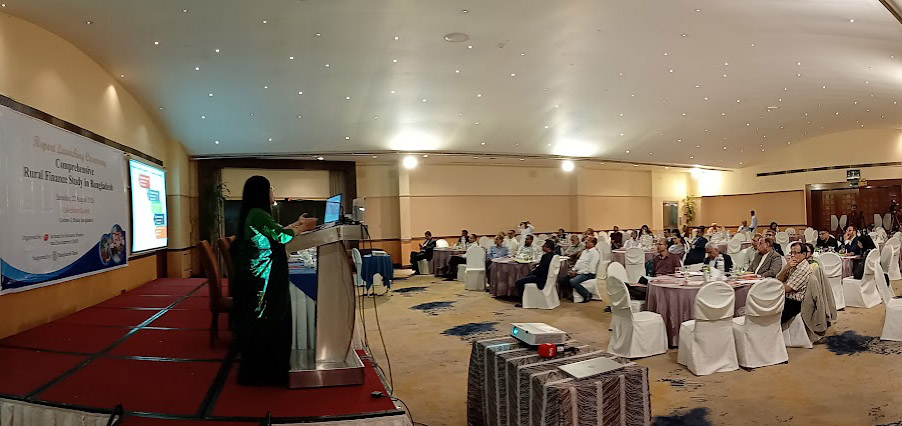
DHAKA, August 23, 2026: The Institute for Inclusive Finance and Development (InM) hosted the Report Launching Ceremony of the Comprehensive Rural Finance Study (CRFS) project on Saturday, 22 August 2026, at the Lakeshore Grand Hotel in Dhaka. Supported by the Bangladesh Bank, the event unveiled the findings of a milestone three-year research effort aimed at reshaping rural financial policies and institutional reorganisation as well as driving inclusive, equitable and sustainable rural transformation.
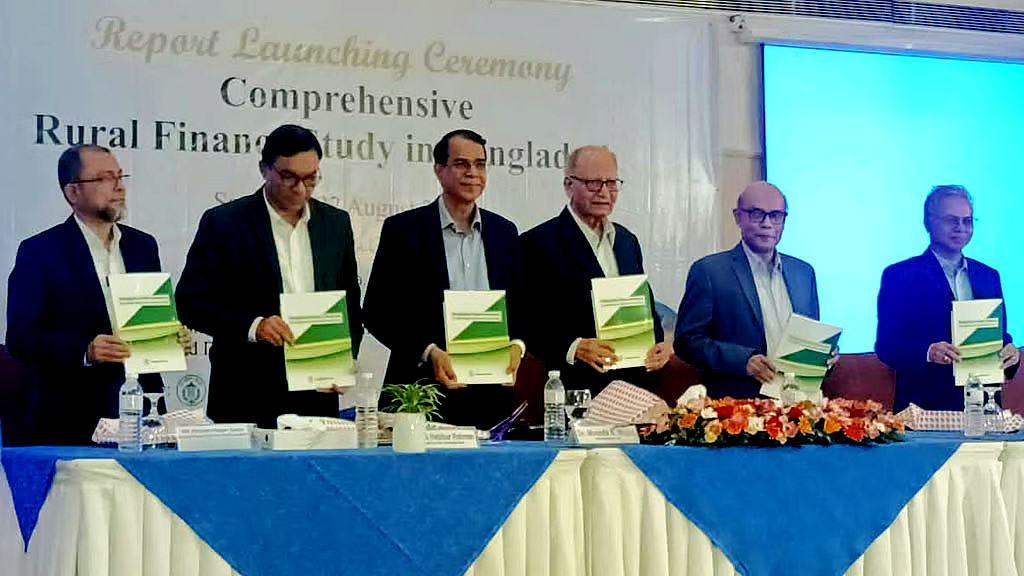
The ceremony was graced by Dr. Md Khairuzzaman Mozumder, Secretary of the Finance Division, Ministry of Finance, and Dr. Md. Habibur Rahman, Deputy Governor of Bangladesh Bank, as Special Guests. Dr. Mustafa K. Mujeri, Executive Director of InM, chaired the session.
Under this comprehensive project, a total of 22 reports were produced, including analytical and survey reports, policy papers and briefs, and background studies. The project also conducted Bangladesh's first-ever nationally representative Rural Finance Survey, mapping out financial behaviours, product adoption, and institutional barriers among rural households and cottage, micro, small, and medium enterprises (CMSMEs).
Key Findings & Empirical Data
Policy Implications & Next Steps
The study concludes that expanding affordable savings, credit, and micro-insurance products through banks, Microfinance Institutions (MFIs), and digital platforms is essential for strengthening financial inclusion and building rural economic resilience. The report serves as an evidence-based roadmap for Bangladesh Bank, policymakers, financial service providers, and development partners to foster sustainable and inclusive rural transformation in Bangladesh over the coming decades.
For details, see and/or download the full reports.
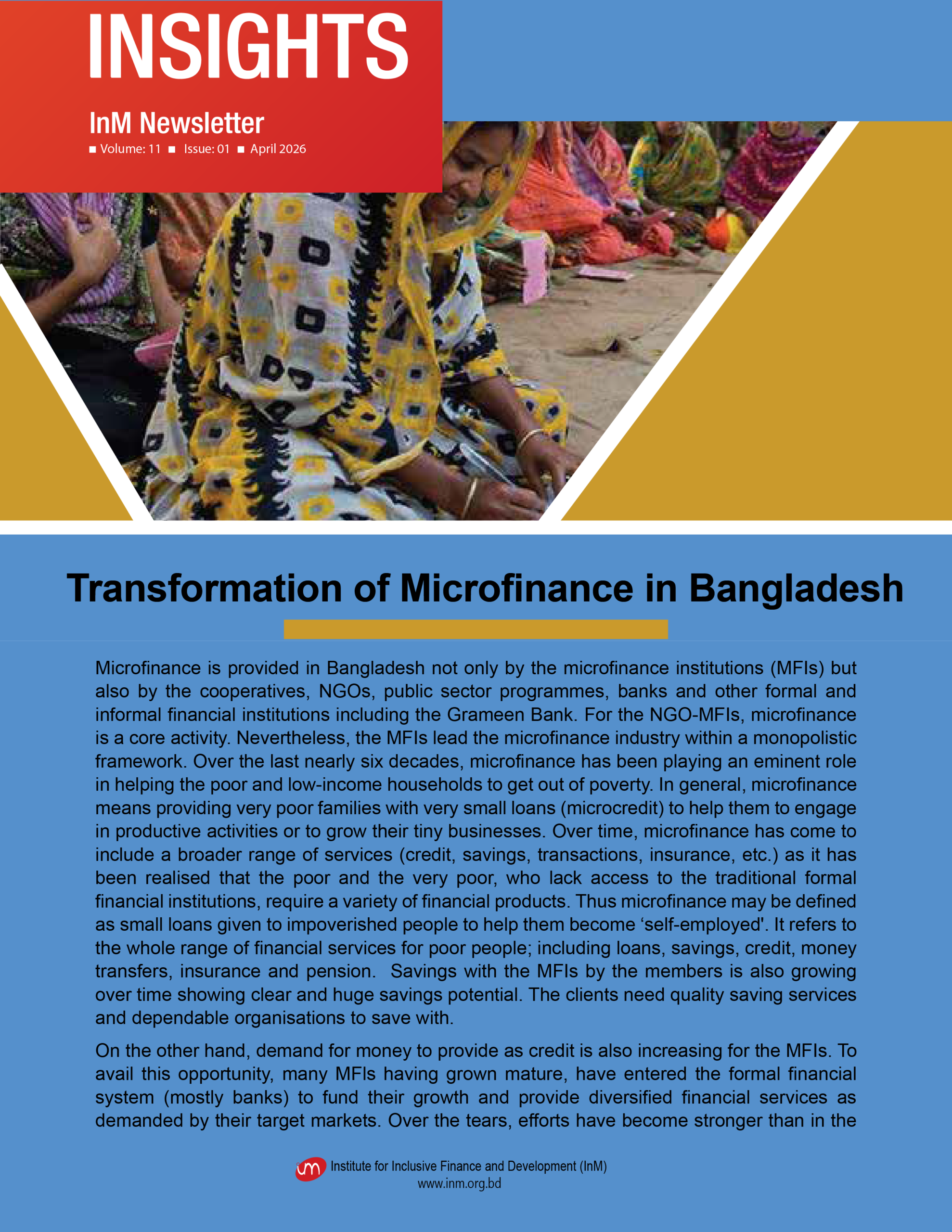
Access to long-term, affordable housing finance remains a significant constraint to the development of Bangladesh’s housing sector, particularly for the low and middle-income households. Rapid urbanisation, sustained population growth, and rising land and construction costs have intensified housing demand, while the supply of affordable housing finance continues to lag behind escalating market demands. The absence of stable, long-tenor funding sources for mortgage lending has limited the ability of financial institutions to scale up housing finance and offer affordable loan terms.
The International Finance Corporation (IFC), a member of the World Bank Group, has commissioned a feasibility study for establishing the Bangladesh Mortgage Refinance Company (BMRC) that will function as a specialised secondary mortgage liquidity facility, providing long-term refinancing to primary mortgage lenders (PMLs) and thereby would strengthen the sustainability and depth of the housing finance market in Bangladesh.
The primary market research for the feasibility study focusing on the demand side of the prospective households is currently being conducted by InM in association with IFC and the Altair Consultancy and Advisory Services Ltd of London.
International Fund for Agricultural Development (IFAD) has recently initiated the project performance evaluation (PPE) of its ‘Promoting Agricultural Commercialization and Enterprises (PACE)’ Project which was implemented by PKSF by its partner organisations. The PPE is being carried out by IFAD’s Independent Evaluation Division in which InM researchers are providing research and advisory support including collection of field level data and information for the evaluation. The objectives of the evaluation are to: provide an independent assessment of the overall results of the project and generate findings and recommendations for the design and implementation of ongoing and future IFAD operations in Bangladesh.
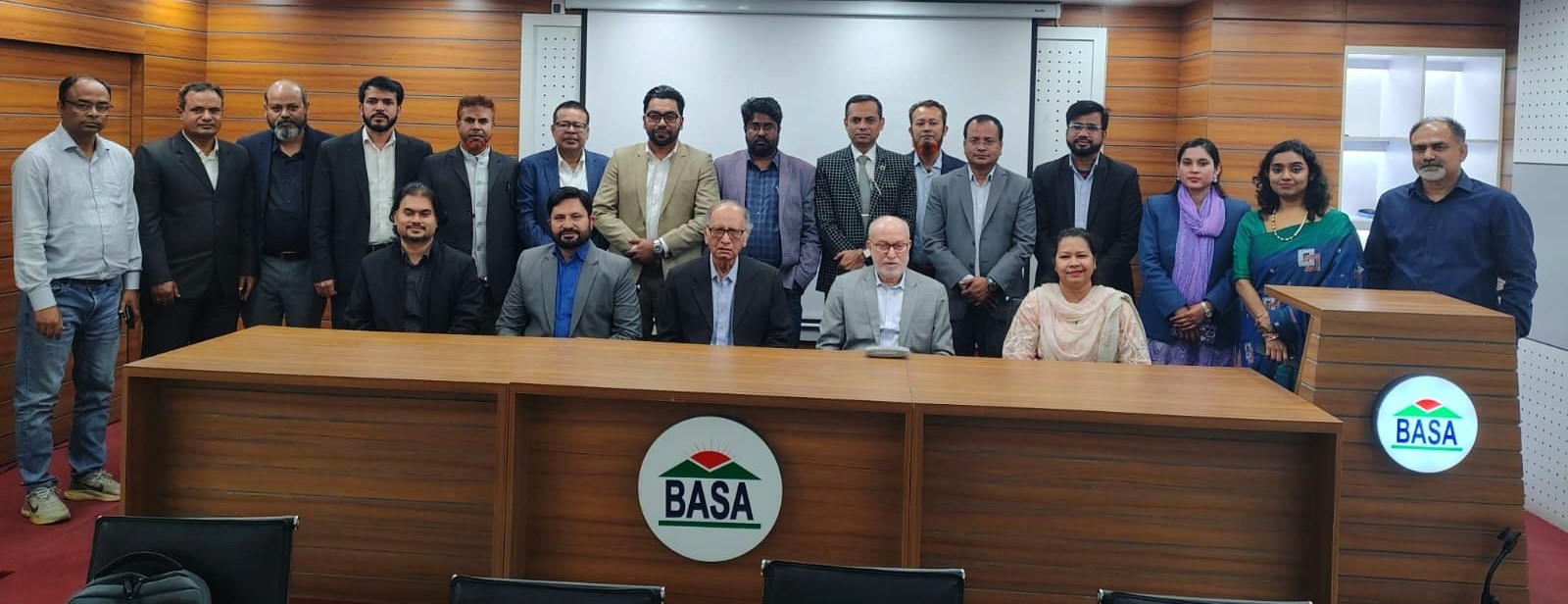
InM, in collaboration with Water.org, organised a day-long Programme Review and Partner Coordination Meeting under the WaterCredit Adoption (WCAD) Programme on 2 February 2026 at the BASA Foundation Head Office in Uttara, Dhaka. The event brought together senior management representatives from seven WCAD partner organisations - BASA Foundation, DISA, IDF, SDC, SFDW, GUK and SDS—creating a dynamic platform for reflection, learning and strategic alignment of planned activities.
The programme commenced with a welcome address by Dr. Mustafa K. Mujeri, Executive Director of InM. This was followed by special remarks from A. K. M. Shirajul Islam, Executive Director of BASA Foundation and Abu Aslam, Portfolio Lead (South Asia) of Water.org. A comprehensive overview of the WCAD programme was presented by Md. Sajjad Kabir, Programme Manager of InM, highlighting key achievements, progress to date and ongoing challenges.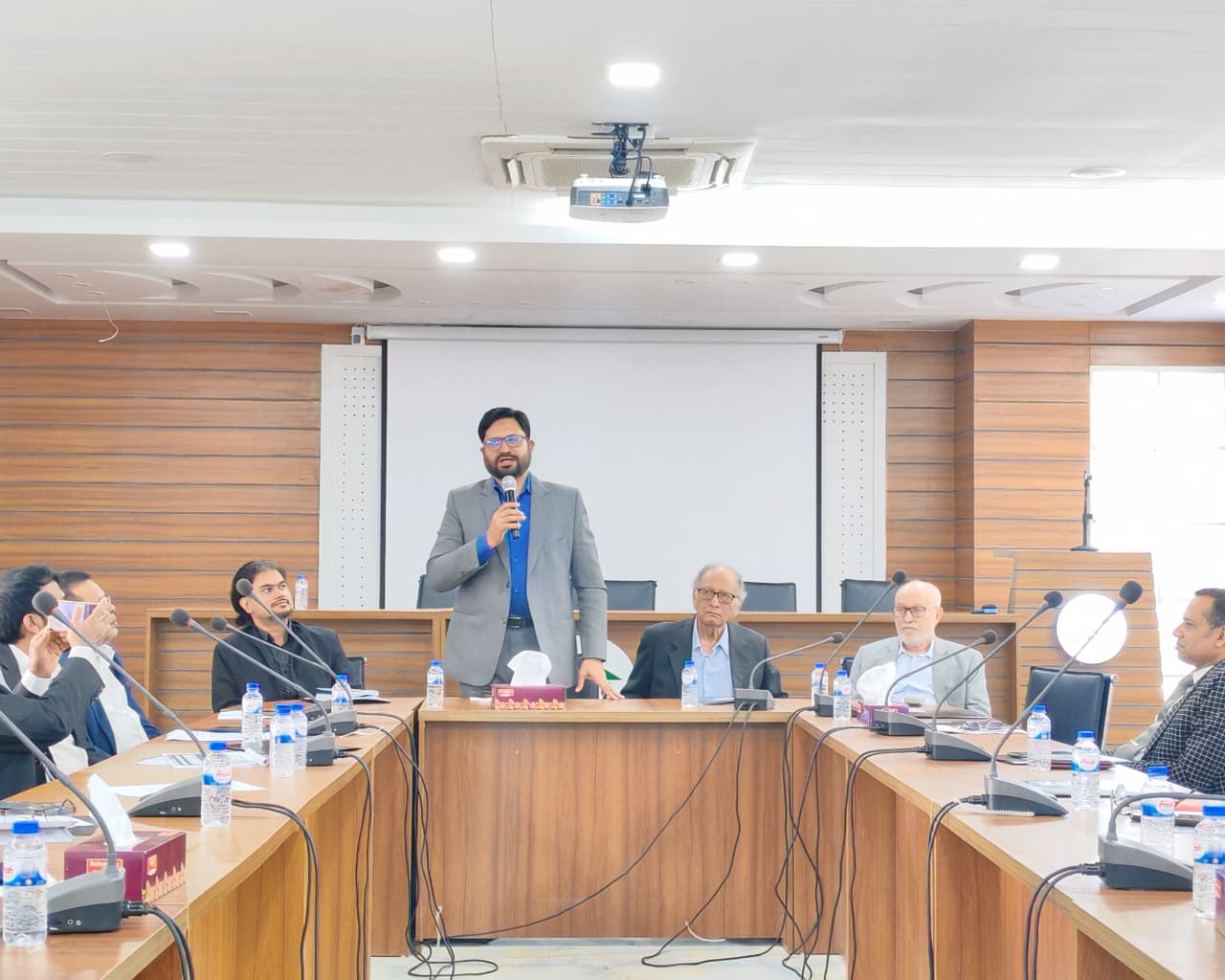
During the session, representatives from each partner organisation shared updates on programme implementation, discussed field-level challenges and presented their mitigation strategies and future action plans. The discussions were highly interactive, fostering open dialogue and collaborative problem-solving approaches among partners. The meeting also served as an effective knowledge-sharing platform, where high-performing partners shared practical strategies and lessons learned with others. This peer-to-peer exchange is expected to strengthen implementation capacity across all partner organisations and enhance overall programme performance.
The event concluded with a renewed commitment from all stakeholders to accelerate progress, address challenges proactively and ensure the continued success and impact of the WCAD programme in improving access to water and sanitation financing for underserved communities.
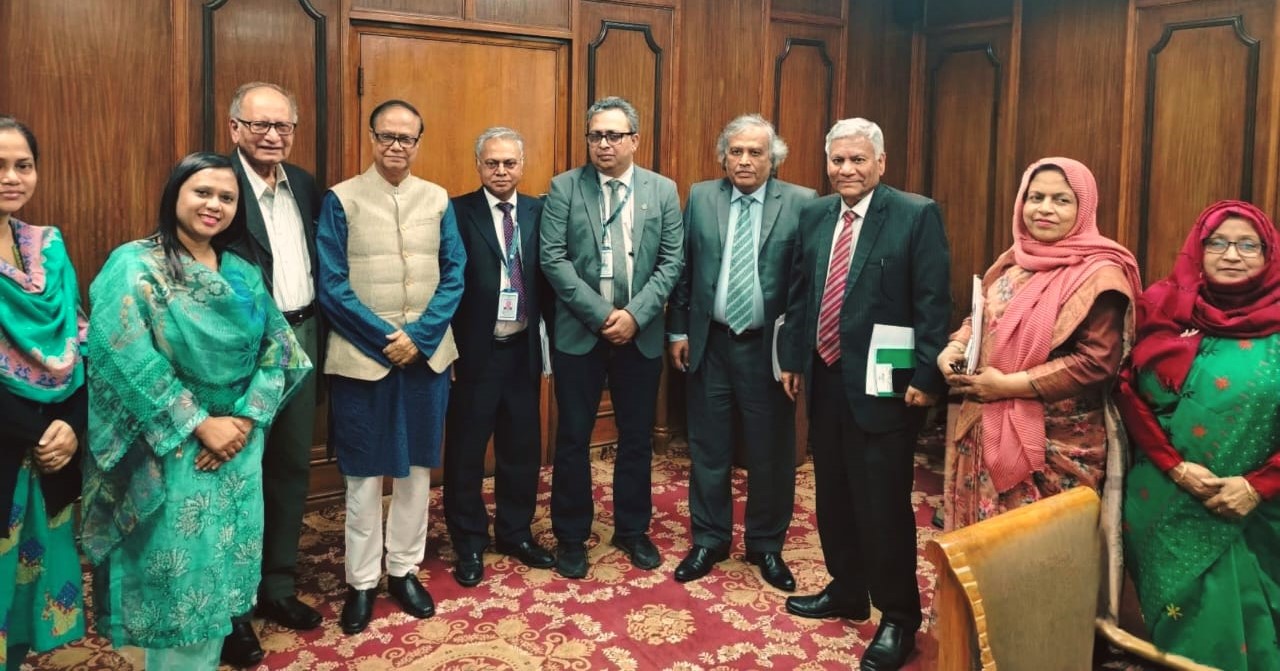
With the support of Bangladesh Bank, the Institute for Inclusive Finance and Development (InM) has been conducting a research programme titled “Comprehensive Rural Finance Study” since 2022. On 9 December 2025, a presentation programme on the draft reports of the study was held at the conference room of the Head Office of Bangladesh Bank. The programme was chaired by the Honourable Governor, Dr. Ahsan H. Mansur. Under this study, a total of 22 reports were produced, including policy briefs/papers, a household survey report, and background study reports. The key findings of the study were presented during the programme. On behalf of InM, Dr. Farhana Nargis, a Core Researcher of the study, made the presentation. The meeting was attended by the Team Leader of the research project, Dr. Mustafa K. Mujeri, Executive Director of InM, along with the Deputy Governors of Bangladesh Bank and senior officials from various departments.
The Bangladesh Poverty Watch Report 2025 is the fourth in the series of this Report jointly prepared by the Institute for Inclusive Finance and Development (InM) and the Center for Inclusive Development Dialogue (CIDD). These Reports aim to ensure that grass root voices of the ‘left behind’ disadvantaged and excluded populations are heard, and their voices are reflected in policies. The Poverty Watch Report 2025 examines the nature, extent and the dynamics of the slum dwellers in Dhaka city – which are concentrated in old city areas, along rivers and rail corridors, and on the city’s fringes where rapid urbanisation, poverty, vulnerability, exclusion and weak urban planning intersect. The central part of the Report consists of the voices and opinions drawn from face-to-face interviews and meetings with individuals from selected slums in Dhaka city conducted during September-December 2025. In the ‘stories’, the participants shared their experience of living in slums that led to their deeper poverty and exclusion; putting them into extremely difficult conditions re-inforced by systemic failures and structural inequalities. The Report also highlights the poverty dynamics in selected slums of Dhaka city using field level data and information, discussion meetings, and case studies, identifying the priority policy agenda for the slum dwellers.
The analysis brings out emerging priorities for policies as well as recommendations for policy makers which are intertwined throughout the Report. The key value addition emerges from testimonies, reflections, proposals and ‘stories’ of persons who are victims of endemic poverty and exclusion in Dhaka city, often described as ‘dark shadows under the light’—a poignant metaphor for the extreme socioeconomic disparities, where the glitter of modern, wealthy, and developed urban areas directly obscures the poverty, neglect, and precarious living conditions of the marginalised communities living in their immediate shadow.
This Policy Brief features the major findings of the Bangladesh Poverty Watch Report 2024: Climate Change and Poverty Nexus prepared by InM in collaboration with the Center for Inclusive Development Dialogue (CIDD) published in May 2025. The focused analysis of the intricate relationship, particularly in the climate-vulnerable regions of the country, highlights the impact of climate-induced hazards on livelihoods and poverty. The emerging policy priorities and the challenges faced by the affected communities are highlighted in the Policy Brief. Bangladesh continues to remain acutely susceptible to the impacts of climate change. Extreme weather events such as rising temperatures, droughts, cyclones, floods, riverbank erosion, salinity intrusion, and sea level rise endanger the lives and livelihoods of millions. These threats are deeply interconnected with the country’s existing challenges of poverty, inequality, and environmental degradation, forming a complex and potentially devastating nexus. In response, Bangladesh has undertaken several national initiatives, notably the National Adaptation Plan of Action (NAPA) and the Bangladesh Climate Change Strategy and Action Plan (BCCSAP). These strategies emphasise an integrated development approach that incorporates climate change management and promotes a transition towards a low-carbon economy. The Policy Brief identifies three critical pathways through which climate change exacerbates poverty and inequality:| Sl.no | Title | Reference No. |
| Analytical and Survey Report | ||
| 1. | Reshaping Rural Finance in Bangladesh: Key to Building Prosperous, Equitable and Inclusive Rural Society | Study Completion Analytical Report: Summary Results and Major Recommendations |
| 2. | Pathways To Smart and Inclusive Rural Bangladesh: Key Recommendations for Reshaping Rural Finance | Comprehensive Summary of Major Recommendations |
| 3. | গ্রামীণ বাংলাদেশে অন্তর্ভুক্তিমূলক উন্নয়ন প্রসারে আর্থিক খাতের সমস্যা ও চ্যালেঞ্জ: ভবিষ্যত যাত্রা পথের জন্য কৌশলগত সুপারিশের সারসংক্ষেপ | Analytical Summary Report in Bangla: Major Findings and Recommendations |
| 4. | Bangladesh: Report of the Rural Finance Survey 2023 | National Survey Report |
| Policy Paper and Policy Brief | ||
| 1. | BANGLADESH: Review of Rural Finance System and Policy Implications | Policy Paper No. 2025-01 |
| 2. | Access to Finance: The Smart Vehicle of Empowerment for Vulnerable Communities in Bangladesh | Policy Brief No. 2025-01 |
| 3. | Dynamising Rural Enterprises in Bangladesh: Access to Finance is the Key | Policy Paper No. 2025-02 |
| 4. | Financing Industry Based Clusters in Rural Bangladesh | Policy Paper No. 2025-03 |
| 5. | Rural Women Entrepreneurship and Access to Finance: Challenges and Opportunities in Bangladesh | Policy Paper No. 2025-04 |
| 6. | Access to Finance of Rural Farming Households in Bangladesh: Challenges and Opportunities | Policy Paper No. 2025-05 |
| 7. | বাংলাদেশের গ্রামীণ নারী উদ্যোক্তাঃ সফলতার পথে চ্যালেঞ্জ এবং অর্থায়নের ভুমিকা | নীতি সংক্ষেপ ২০২৫-০১ |
| 8. | বাংলাদেশে গ্রামীণ কৃষি পরিবারের অর্থায়নঃ সুযোগ, চ্যালেঞ্জ ও সম্ভাবনা | নীতি সংক্ষেপ ২০২৫-০২ |
| Background Report | ||
| 1. | Changing Face of Rural Finance in Bangladesh: Achievements and Future Challenges | Background Report No. 2025-01 |
| 2. | Financial Needs of Selected Marginalised and Vulnerable Communities in Bangladesh | Background Report No. 2025-02 |
| 3. | Access to Finance for Rural Entrepreneurs in Industry Based Clusters of Bangladesh | Background Report No. 2025-03 |
| 4. | Access to and Use of Financial Services by Rural Entrepreneurs in Bangladesh | Background Report No. 2025-04 |
| 5. | Access to Financial Services by Rural Women Entrepreneurs in Bangladesh | Background Report No. 2025-05 |
| 6. | An Overview on Rural Finance in Bangladesh Structure, Policies and Priorities | Background Report No. 2025-06 |
| 7. | Supply Side Analysis on Comprehensive Rural Finance | Background Report No. 2025-07 |
| 8. | Access to Finance of Farming and Non-farming Households in Rural Bangladesh | Background Report No. 2025-08 |
| 9. | Penetration of Agent Banking and Mobile Financial Services in Rural Areas of Bangladesh | Background Report No. 2025-09 |
| 10. | Regional Variation in Access to Finance by Rural Households in Bangladesh | Background Report N0. 2025-10 |
The 5th meeting of the Advisory Committee of the “Comprehensive Rural Finance” study supported by the Bangladesh Bank was held on 25 November 2024 at InM Conference Room, House: 50 (5th Floor), Road: 8, Block: D, Niketon, Gulshan 1, Dhaka 1212. Dr. Qazi Kholiquzzaman Ahmad, Chairman of the Advisory Committee chaired the meeting which was attended by Dr. Nazma Begum, former Professor, Department of Economics, University of Dhaka; Dr. Mustafa K. Mujeri, Executive Director, Institute for Inclusive Finance and Development (InM), Mr. Helal Ahmed Chowdhury, Chairman Board of Directors, BASIC Bank Limited, Dr. Toufic Ahmad Choudhury, Director General, Bangladesh Academy for Securities Markets and Dr. Ahmed Mushtaque Raza Chowdhury Former Vice Chairperson, BRAC.


 The meeting reviewed the progress of the study and outlined the work plan for the upcoming six months. During the discussion, the main report's chapter structure was briefly examined and the advisory committee members suggested adding more sub-sections to improve the report's quality and relevance. Additionally, the main findings from four background reports were presented: (i) Survey Report: Bangladesh-Report of the Rural Finance Survey 2023; (ii) Access to Finance for Farming and Non-farming Households in Rural Bangladesh; (iii) Penetration of Agent Banking and Mobile Financial Services in Rural Areas of Bangladesh; and (iv) Regional Variations in Access to Finance Among Rural Households in Bangladesh. Based on these findings, committee members explored various options and proposed actions to ensure the report’s quality and relevance. They also commended InM’s efforts in working towards the study's overall objectives.

